Appalachian oral history sources
How should readers assess family healing stories?
Ask who is speaking, where and when it happened, how the story travelled, and what else supports it. Meaning and medical proof are separate questions.
A healing story kept in a family is a genuine historical source, and it is a fragile one. Granny Magic works with exactly this kind of material: customs recorded in memories, interviews, newspapers, and outsiders’ accounts. Its approach asks what can responsibly be said about such a record, which means reading the source before reading the claim.
Five questions to ask first
A short method for a family account
- 01
Who is speaking?
Name the narrator and their relationship to the story. A daughter repeating her mother’s account is a different source from the person who was in the room.
- 02
Where did it happen?
Place narrows the claim. A custom remembered in one community cannot be extended to a whole region without further evidence.
- 03
When was it told, and about when?
Separate the date of the event from the date of the telling. A story recorded decades later carries the later teller’s understanding with it.
- 04
How was it transmitted?
Family retelling, a written note, an interview, a newspaper piece, and a published collection are different channels, each with its own distortions.
- 05
What corroborates it?
Look for a second, independent account: a neighbour’s memory, a dated document, a photograph, a record of the same practice elsewhere.
Three kinds of claim
Documented practice, reported belief, later reinvention
Documented practice is something a source shows people doing, in a place and a period. Reported belief is what people said they believed or said happened, without independent confirmation. Later reinvention is what a revival, a commercial retelling, or a popular book added afterwards.
Keeping the three apart is the difference between writing history and repeating a rumour with better typography. It also protects living communities: a practice attributed to the wrong people is a form of erasure, even when the intention is admiration.
The book applies that discipline to cultural exchange as well. It considers how customs moved between communities while asking readers to respect African American and Indigenous contexts, acknowledge local differences, and resist a single origin story for the whole region.
Questions readers ask
Evidence, meaning, and archives
How does Granny Magic distinguish belief from evidence?
By separating documented practice, reported belief, and later reinvention, and by treating memories, interviews, newspapers, and outsiders’ accounts as sources with limits. A custom can be well evidenced as a custom without being evidence that it worked.
Can a family story prove that a remedy worked?
No. A single remembered recovery cannot show that a practice caused it, because the outcome may have had other causes and the story may have selected the memorable case. The story can still be strong evidence of what the family believed and did.
Where can oral histories of Appalachian life be found?
Large public collections hold recorded interviews and ethnographic documentation. The Library of Congress American Folklife Center, for example, describes holdings recorded from the nineteenth century to the present. That is background on available archives, not a claim about this book’s sources.
What if my family story has no documents at all?
Record it properly: who told it, when, where, and in what words. An undated story is not worthless, but it is a weaker source for a historical claim, and it is still a strong source for family memory.
For archive and collection background, see the Library of Congress American Folklife Center research guide. For supplement safety questions, the NCCIH overview of dietary supplements is a clearer guide than any family manuscript.
Continue reading
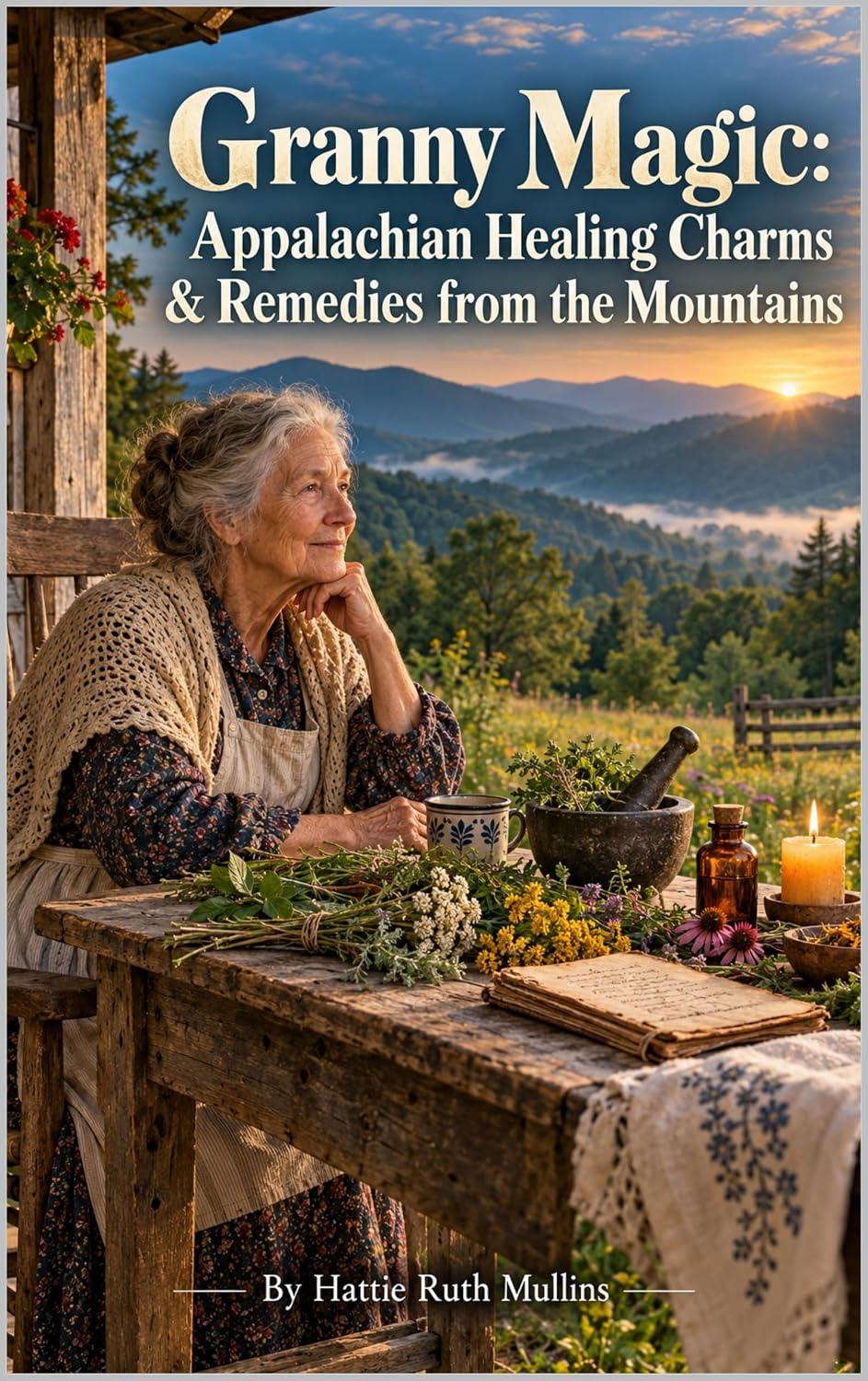
The book
Follow the book to its Amazon listing
Granny Magic asks what families preserved, how knowledge travelled, and what can responsibly be said about the record. The Amazon listing carries the publisher's description.
Listing and purchase are handled on Amazon