Appalachian folklore book club questions
Discussion questions for reading groups
Twelve questions for groups reading Granny Magic, organised around caregiving, evidence, cultural attribution, and the family record.
These questions were written for this reader’s guide. They are not supplied by the publisher or the author, and they refer to themes named in the book’s description rather than to particular chapters.
A workable format is ninety minutes: twenty minutes on caregiving and trust, twenty on belief and safety, twenty on place and attribution, and thirty on the family record, which is usually where the personal stories arrive. Groups that prefer to read first and talk later can take one section per meeting.
Caregiving, trust, and obligation
- 1.1
A household sent for a neighbour rather than a doctor. What did that choice require of the person who came, beyond knowing a remedy?
- 1.2
The book describes caregiving as reciprocal obligation. What did a family owe the woman who helped them, and how might that debt have shaped later stories about her?
- 1.3
Where do community healers and granny midwives overlap in the book, and where does the evidence ask us to keep them apart?
Belief, evidence, and safety
- 2.1
The book separates documented practice, reported belief, and later reinvention. Which of the three is hardest to recognise in a story you already trust?
- 2.2
Spoken healing gave comfort in frightening moments. How should a discussion hold that comfort and the absence of medical proof at the same time?
- 2.3
The cupboard strand names the hazard behind assuming that traditional means safe. What changes when a familiar plant is treated as a substance with a dose and a possible interaction?
Place, exchange, and attribution
- 3.1
The book resists a single origin story for Appalachian healing. What is gained, and what is lost, when a region’s practices are given one ancestor?
- 3.2
It asks readers to respect African American and Indigenous contexts and to acknowledge local differences. How does a group discussion avoid both flattening and inventing lineage?
- 3.3
Almanacs, lunar timing, and blue ceilings organise ordinary decisions. Which of these customs would be hardest to document, and why?
Memory and the family record
- 4.1
What healing story does your own family keep, and who is the narrator of it now?
- 4.2
Which of the five source questions (narrator, place, date, transmission, corroboration) would most change how you tell that story?
- 4.3
If a custom is remembered in one community and nowhere else, what can a reader responsibly conclude about it?
- 4.4
The book is framed as history and folklore, not a medical manual. What did that framing make possible, and what did it deliberately leave out?
Before the meeting
Two short readings to steady the discussion
Groups often reach the evidence question with strong feelings and no method. The five source questions and the three kinds of claim give the conversation something to hold on to.
Continue reading
- Folk healing historyThe historical frame for the first two discussion sections.
- Granny women and midwivesBackground for the questions about trust and obligation.
- Almanacs and everyday signsThe calendar customs behind the place-and-attribution section.
- Healing prayers and talking fireSpoken practice, comfort, and the limits of medical claims.
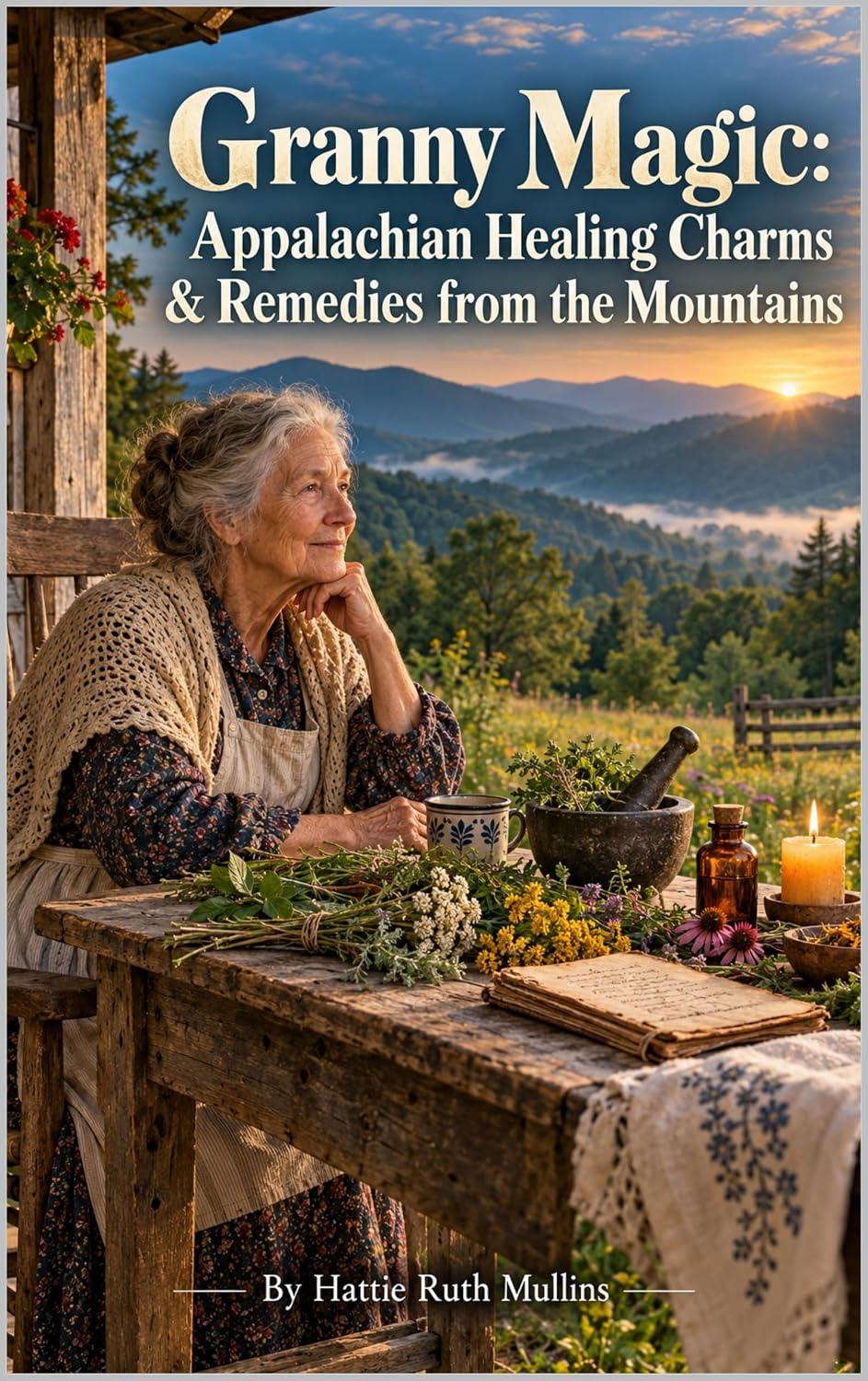
The book
Follow the book to its Amazon listing
Granny Magic is a history and folklore of Appalachian healing traditions, and the listing is the right place to check format and price before a group orders copies.
Listing and purchase are handled on Amazon