Appalachian healing prayers & folklore
Spoken healing: the verse, the Psalms, and talking fire
In mountain households, words were part of care. The book reads spoken healing as Christian practice and as folklore, while keeping spiritual comfort clearly apart from medical treatment.
Spoken healing is the part of Appalachian folk practice that survives most easily in memory, because it needs no cupboard and no equipment. Granny Magic places it inside Christian life: the blood-stopping verse, the Psalms, and the varied traditions of “talking fire”.
The book’s distinction is deliberate. A spoken prayer may have given comfort, courage, and a sense of shared responsibility in a frightening moment. That is a real thing to study. It is not the same as a demonstrated treatment, and the book does not present it as one.
Questions readers ask
Defining a reported tradition, carefully
What is talking fire in Appalachian folklore?
The phrase is generally explained as a spoken formula said over a burn, and it belongs to a wider family of Christian spoken-healing customs. In Granny Magic it appears among varied traditions of talking fire, presented as reported belief rather than as demonstrated treatment. This site does not reproduce the words or give instructions for using them.
What is the blood-stopping verse?
It is a spoken verse traditionally associated with staunching bleeding, and the book names it as one of the spoken practices it examines. Bleeding is a medical emergency; a verse is not a substitute for pressure, a call for help, or professional care.
Why do the Psalms appear in these traditions?
The Psalms are the devotional language many mountain families already knew by heart, which made them available in a sickroom without a book. The book treats their use as part of Christian life and as part of the folklore of care, not as a technique with a guaranteed outcome.
Does the book say spoken healing works?
It does not make medical claims. It examines what people said, why they said it, and what it meant to a household facing illness, while distinguishing spiritual comfort from treatment. Claims about effectiveness would need evidence of a different kind.
Two kinds of claim
Meaning is not the same as effectiveness
A story about a verse can be entirely true as a story and still tell us nothing about whether a burn healed faster. The book keeps those questions apart, which is what allows it to take the practice seriously without overstating it.
Readers who want to understand a family’s spoken custom can ask who said it, in what circumstances, and what the family believed it was doing. Those questions belong to history and folklore. Questions about whether a practice treats a condition belong to medicine, and this site does not answer them.
For anything urgent, contact emergency services or a clinician. Serious burns and uncontrolled bleeding need medical care, not a spoken formula.
Continue reading
- Granny women and midwivesThe people who carried the words, and the trust that let them be spoken.
- Household remediesThe plant and pantry side of the same visit.
- Assessing family storiesHow to weigh a healing story you were told at home.
- Folk healing historyWhy the written record of spoken practice is so uneven.
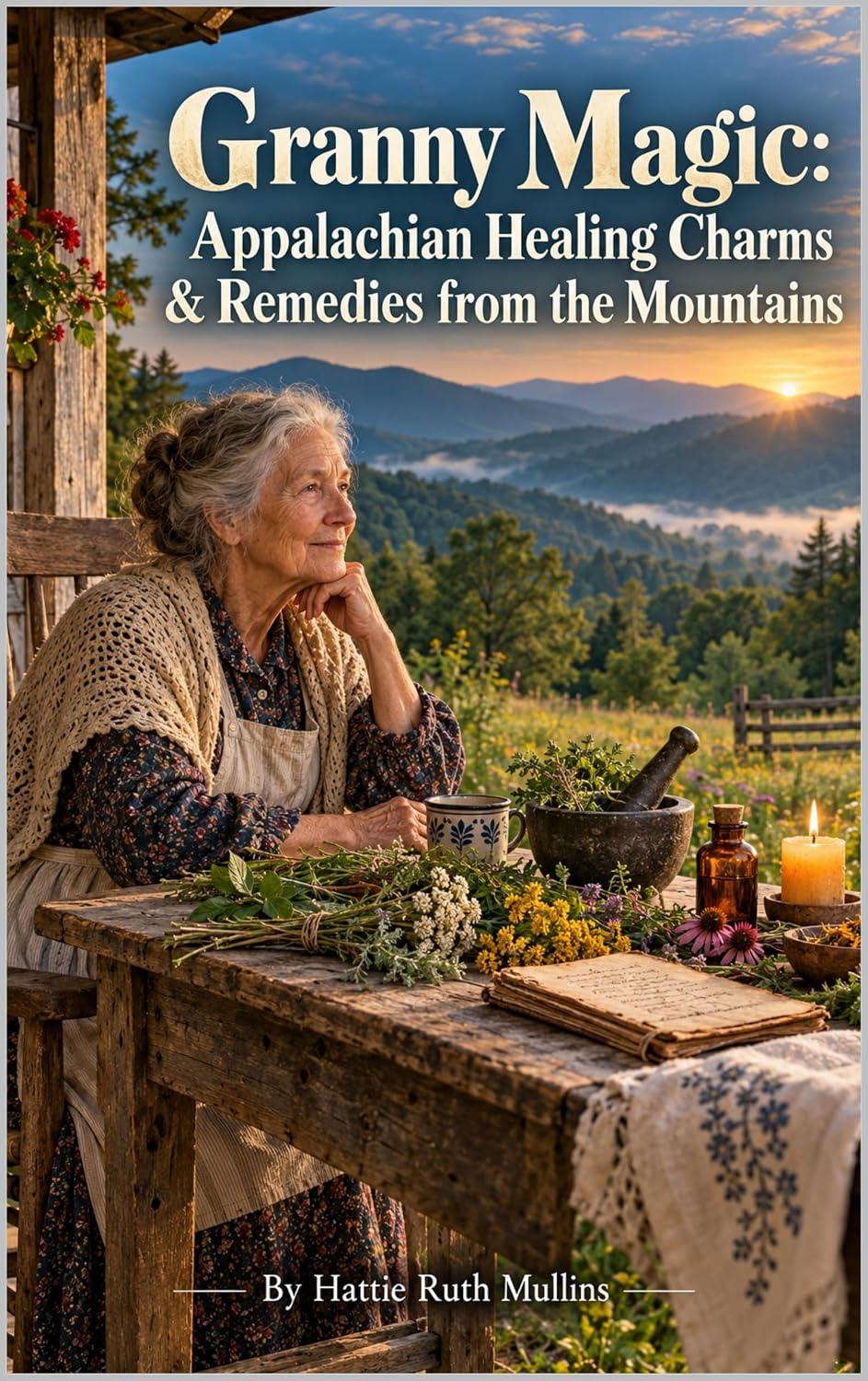
The book
Follow the book to its Amazon listing
Granny Magic examines spoken healing as part of Appalachian Christian life and folklore. The Amazon listing carries the publisher's description and current details.
Listing and purchase are handled on Amazon