Appalachian household remedies
The mountain pharmacy was a cupboard, not a clinic
Ginseng, stored plants, and pantry ingredients: the book examines what households kept and why, and the hazards behind the assumption that familiar means safe.
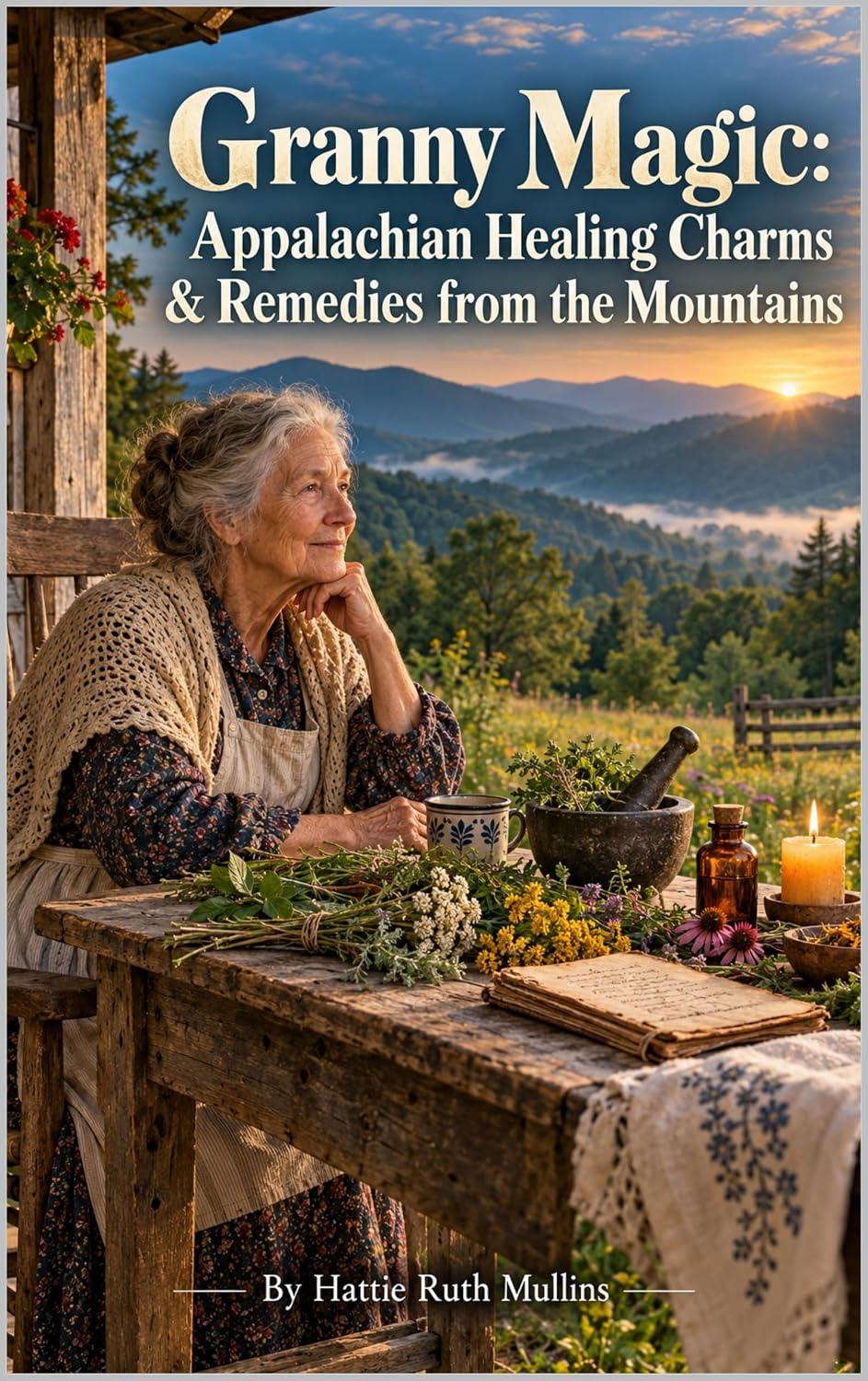
Appalachian household remedies were, first of all, a storage problem. What a family could gather, dry, preserve, or buy in small quantities shaped what it could offer when someone fell ill. Granny Magic describes this as the mountain pharmacy and household cupboard: ginseng, stored plants, and pantry ingredients kept within reach.
The book is equally direct about the risk. Familiar and traditional do not mean safe, and it names that assumption as a hazard rather than treating age as a guarantee. This site does not reproduce remedy instructions, preparations, or doses, and neither should a history be read as a prescription.
General context, clearly separated
Why “it has always been used” is not a safety claim
This paragraph is background from a public health source, not a claim about what the book contains. The US National Center for Complementary and Integrative Health notes that the amount of scientific evidence varies widely between supplements, that some may interact with medications or pose risks during surgery, and that many have not been tested in pregnant women, nursing mothers, or children. It also notes that products sold in stores or online may differ from those studied. Read “Using Dietary Supplements Wisely”.
That is the modern version of a very old problem. A plant with a long history of household use still has an uncertain dose, an uncertain preparation, and a possible interaction with whatever else a person is taking.
Questions readers ask
About the cupboard and its limits
Does Granny Magic contain remedies readers can make?
The book is presented as history and folklore, not as a medical manual, and its listed subject is the household cupboard as a historical world. This reader’s guide does not publish preparations, doses, or treatment instructions. For anything you intend to take, ask a pharmacist or clinician.
Why does ginseng keep appearing in these accounts?
It was a plant with household standing and commercial value in the mountains, which made it both a medicine cabinet item and a cash crop. The book names it among the plants of the mountain pharmacy without treating its reputation as proof of effect.
Were household remedies used because doctors were far away?
Distance and cost shaped care, and the book places household practice alongside changing medical systems rather than before them. Families used what they had while also calling on neighbours, midwives, and, increasingly, physicians.
How should a family recipe be treated today?
As a historical document with real meaning, and as an unverified preparation. Record who wrote it, when, and what it was used for, and keep the cultural value separate from any question of safety or effectiveness.
What a cupboard can tell a historian
Storage is evidence
A list of what a household kept is also a list of what it could afford, grow, trade for, and trust. Dried plants imply a season of gathering and a place to hang them. Pantry ingredients imply a kitchen that could spare them. Trade goods imply a road and a store.
Read that way, the cupboard is a small record of a household economy, and it explains why remedies differed so much between one hollow and the next.
Continue reading
The book
Follow the book to its Amazon listing
Granny Magic examines the mountain cupboard as part of Appalachian history, including the risks of assuming that traditional means safe. The Amazon listing carries the publisher's description.
Listing and purchase are handled on Amazon