History & folklore · Published October 25, 2026
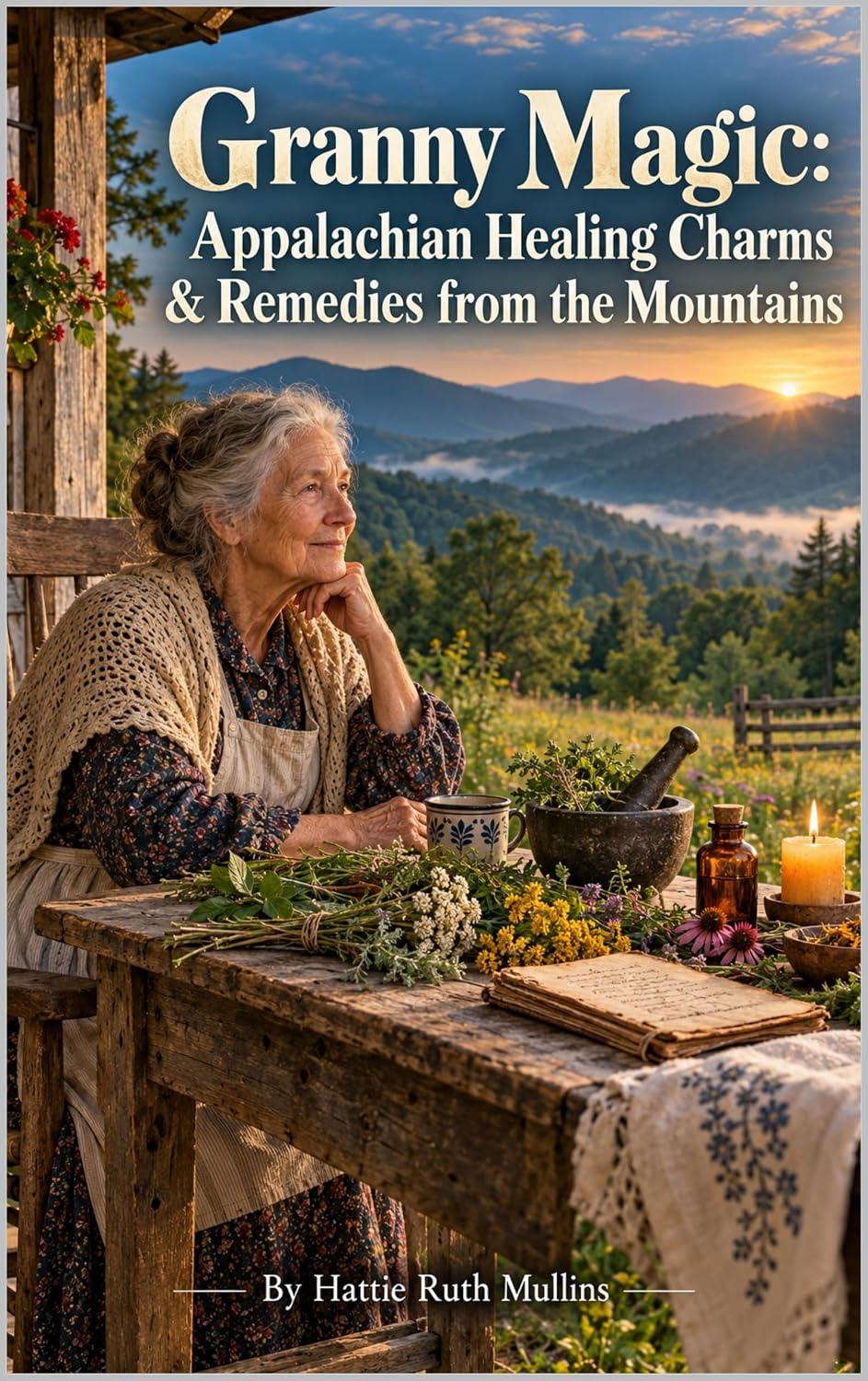
Granny Magic: Appalachian Healing Charms & Remedies from the Mountains
A book by Hattie Ruth Mullins
When illness or uncertainty reached a mountain household, who did the neighbours send for? A history and folklore of mountain caregiving: the granny woman, the spoken verse, and the household cupboard.
Listing and purchase are handled on Amazon
Framing
History and folklore, not a medical manual
Evidence
Memories, interviews, newspapers, outsiders’ accounts
Reading
A guide to the book and the questions it raises
What this book explores
Five strands of mountain caregiving
Each strand below comes from the book’s own description. They overlap in practice, and the book is careful about that: a household remedy, a spoken prayer, and a neighbour’s reassurance could arrive together in the same visit.
- 01
Community healers and granny midwives
Experience, apprenticeship, trust, and the responsibilities of helping neighbours. The book asks who a mountain household sent for, and what that trust required of the person who came.
Read about granny women - 02
Spoken healing in Christian life
The blood-stopping verse, the Psalms, and the varied traditions of “talking fire”, with a clear distinction between spiritual comfort and medical treatment.
Read about spoken healing - 03
The mountain pharmacy and household cupboard
Ginseng, stored plants, pantry ingredients, and the hazards behind the assumption that familiar or traditional means safe.
Read about household remedies - 04
Calendars, protection, and everyday signs
Almanacs, lunar timing, blue ceilings, dreams, and the meanings people found in uncertain circumstances.
Read about almanac traditions - 05
Tradition under pressure
Witchcraft accusations, changing medical systems, and the knowledge that continued within families rather than in public records.
Read the healing history
Why a reader would choose it
It asks what we can responsibly say
Many accounts of Appalachian healing arrive already decided, either as romantic nostalgia or as easy dismissal. This book takes a slower route through the evidence.
No single origin story
The book considers cultural exchange without handing one tidy source to customs that varied by family, community, and decade.
Three things kept apart
Documented practice, reported belief, and later reinvention are treated as different kinds of claim, not as one tradition.
Memory taken seriously, not as proof
Memories, interviews, newspapers, and outsiders’ accounts are read for what they preserve and for what they leave out.
History and folklore, plainly stated
The listing is explicit that this is not a medical manual. Readers who want treatment instructions are looking for a different book.
Who it is for
Readers drawn to what was kept, and how
The book speaks to people curious about the human work of caregiving in the mountains, before and alongside modern medicine.
- Readers of Appalachian history who want the household and the neighbour in the story, not only the timeline.
- Folklore and folk-belief readers interested in how customs were learned, borrowed, and passed on.
- Family historians holding a remedy, a verse, or a story they cannot place.
- Book clubs that prefer a discussion about evidence to a discussion about cures.
It is not a herbal, a recipe collection, or a medical manual. It offers no treatment advice, and nothing on this site should be used as one.
Reader questions
Direct answers, before the longer reading
What does Granny Magic by Hattie Ruth Mullins explore?
The book examines Appalachian healing traditions as history and folklore: community healers and granny midwives, spoken healing in Christian life, household plants and cupboard ingredients, almanacs and everyday signs, and what happened to those customs as medicine changed. Its listing presents it as a history, not a medical manual, so it explains what families preserved and how knowledge travelled rather than offering treatment instructions.
How does Granny Magic distinguish belief from evidence?
It separates documented practice, reported belief, and later reinvention, and it treats memories, interviews, newspapers, and outsiders’ accounts as sources with limits rather than as proof. The book’s framing asks what can responsibly be said about a custom, which is a historical question before it is a medical one. Our guide to reading family healing stories sets out the questions that distinction invites.
How does Granny Magic discuss cultural exchange?
The book resists a single origin story for Appalachian healing. It considers cultural exchange while asking readers to respect African American and Indigenous contexts, acknowledge local differences, and avoid claiming one tidy source for practices that varied by family and place.
More questions are answered in the section guides: assessing family healing stories, granny women and granny midwives, and talking fire.
Book and author details
Granny Magic
Appalachian Healing Charms & Remedies from the Mountains
By Hattie Ruth Mullins
- Full title
- Granny Magic: Appalachian Healing Charms & Remedies from the Mountains
- Author
- Hattie Ruth Mullins
- Published
- October 25, 2026
- ASIN
- B0HP8QYB5X
- Subject
- Appalachian history, folk belief, and the work of caregiving
- Framing
- History and folklore, not a medical manual
Start here
Read the book, then keep the questions
If you want to understand what these traditions meant, and how to remember them without mistaking inheritance for proof, the book is the place to begin. Its Amazon listing carries the description, format, and price set by the publisher.
Listing and purchase are handled on Amazon