Appalachian folk healing history
Appalachian folk healing history is a history of care
Who a household sent for, what sat in the cupboard, what was said aloud, and how that knowledge moved between people: these are historical questions before they are medical ones.
Appalachian folk healing history is the study of how mountain families and communities responded to illness and uncertainty. It looks at the people who were called on, the plants and pantry goods kept close at hand, the words spoken over a hurt, and the signs people read when the outcome was not theirs to control.
Granny Magic approaches that subject as history and folklore rather than as a medical manual. Its description sets out the questions it follows: what families preserved, how knowledge travelled, and what can responsibly be said about customs recorded in memories, interviews, newspapers, and outsiders’ accounts.
What the record actually contains
Four kinds of source, four kinds of limit
Memories
A family story keeps meaning and detail, but it changes as it is retold. Who told it, to whom, and when, matters.
Interviews
Recorded speech carries a narrator’s own framing: what they chose to explain, soften, or leave out for a listener.
Newspapers
Print records are dated and locatable, and they were written for an audience, often with a point to make about mountain life.
Outsiders’ accounts
Travellers, officials, and later writers described what they thought they saw. Their distance is part of the evidence.
Large public archives make the scale of that material easier to see. The Library of Congress American Folklife Center describes itself as one of the largest archives of ethnographic materials in the United States, with documentation recorded from the nineteenth century to the present. That is background on the sources available for regional folklife, not a claim about what this particular book contains. Read the American Folklife Center guide.
Why there is no single origin story
Customs travelled, and they changed on the way
It is tempting to give Appalachian healing one ancestor and one line of descent. The book resists that. It considers cultural exchange while asking readers to respect African American and Indigenous contexts, acknowledge local differences, and keep documented practice distinct from reported belief and from later reinvention.
This matters for how the history is written. A remedy remembered in one hollow and a remedy remembered two counties away may share a plant and nothing else. Treating them as one tradition flattens the families who kept them, and it hides the people who carried knowledge between communities under pressure.
Questions readers ask
About the history and its evidence
Is Appalachian folk healing one single tradition?
No. The book treats it as many local practices that overlapped and diverged, and it warns against a single origin story. What a family kept in one place was not necessarily what a family kept in the next.
How does Granny Magic discuss cultural exchange in Appalachian healing?
It considers exchange between communities while declining to assign one tidy source to the whole tradition. It asks readers to respect African American and Indigenous contexts, acknowledge local differences, and avoid inventing specific lineages the evidence does not support.
Does the book tell readers which remedies work?
Its framing is historical, not clinical. It examines what people did and what they believed, and it separates that from evidence of medical effectiveness. Nothing here or in the listing should be read as treatment guidance.
Continue reading
- Granny women and midwivesWho was called, what trust required, and how roles differed by community.
- Healing prayers and talking fireSpoken healing inside Christian life, and the line between comfort and treatment.
- The mountain cupboardGinseng, stored plants, pantry ingredients, and the safety assumption behind them.
- Assessing family storiesFive questions that separate cultural meaning from medical proof.
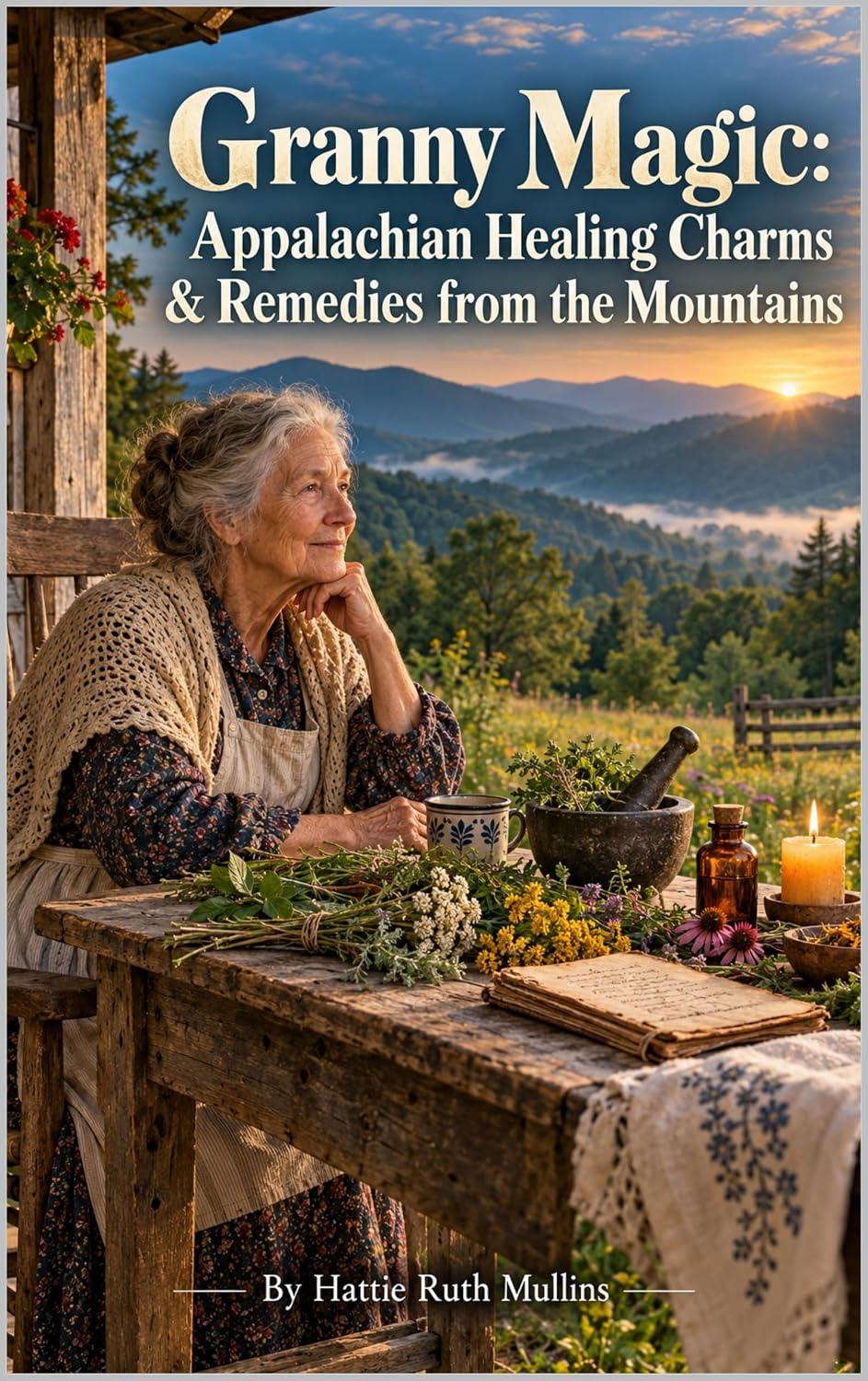
The book
Follow the book to its Amazon listing
Granny Magic follows these questions through mountain households as history and folklore. The Amazon listing carries the publisher's description and current details.
Listing and purchase are handled on Amazon